Quick answer: this is a scam
Scam texts and WhatsApp messages are one of the fastest growing forms of fraud worldwide. If you received an unexpected message threatening a fine, offering a prize or upgrade, or asking you to click a link urgently, do not click anything. Genuine companies and apps do not operate this way.
Why your phone is now the main target
Email scams have been around long enough that most people have developed some instinct for spotting them. Scammers know this. Over the last few years the focus has shifted to SMS and messaging apps like WhatsApp precisely because people tend to trust messages on their phones more than emails in their inbox.
A text feels personal. WhatsApp feels like a conversation with someone real. That sense of familiarity is what makes these messages so effective. You are not in front of a computer with a spam filter and a healthy scepticism. You are on your phone, probably in a hurry, and a message arrives that demands your attention.
The two examples in this guide show very different types of scam but they share the same underlying approach. One uses fear, the other uses excitement. Both are designed to get you to click without thinking.
Example one: the fake fine text
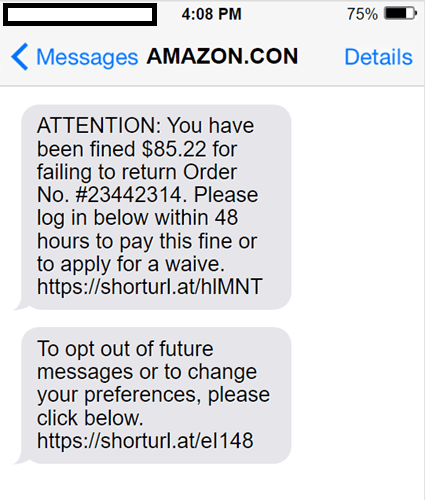
This message is designed to shock you into acting before you have had time to think. A fine. A specific amount. An order number. A 48 hour deadline. Every element is chosen to make you feel like something urgent and real has happened to your account.
But look closely at the sender name at the top of the message. It reads AMAZON.CON. Not AMAZON.COM. The scammer made a typo in their own fake sender name. That single detail is enough to know this message did not come from Amazon.
Beyond that, Amazon does not fine customers for failing to return orders. That is not something Amazon does. The scenario described in this message simply does not reflect how Amazon operates, which is why the language has to be vague enough to sound plausible without being specific enough to be verifiable.
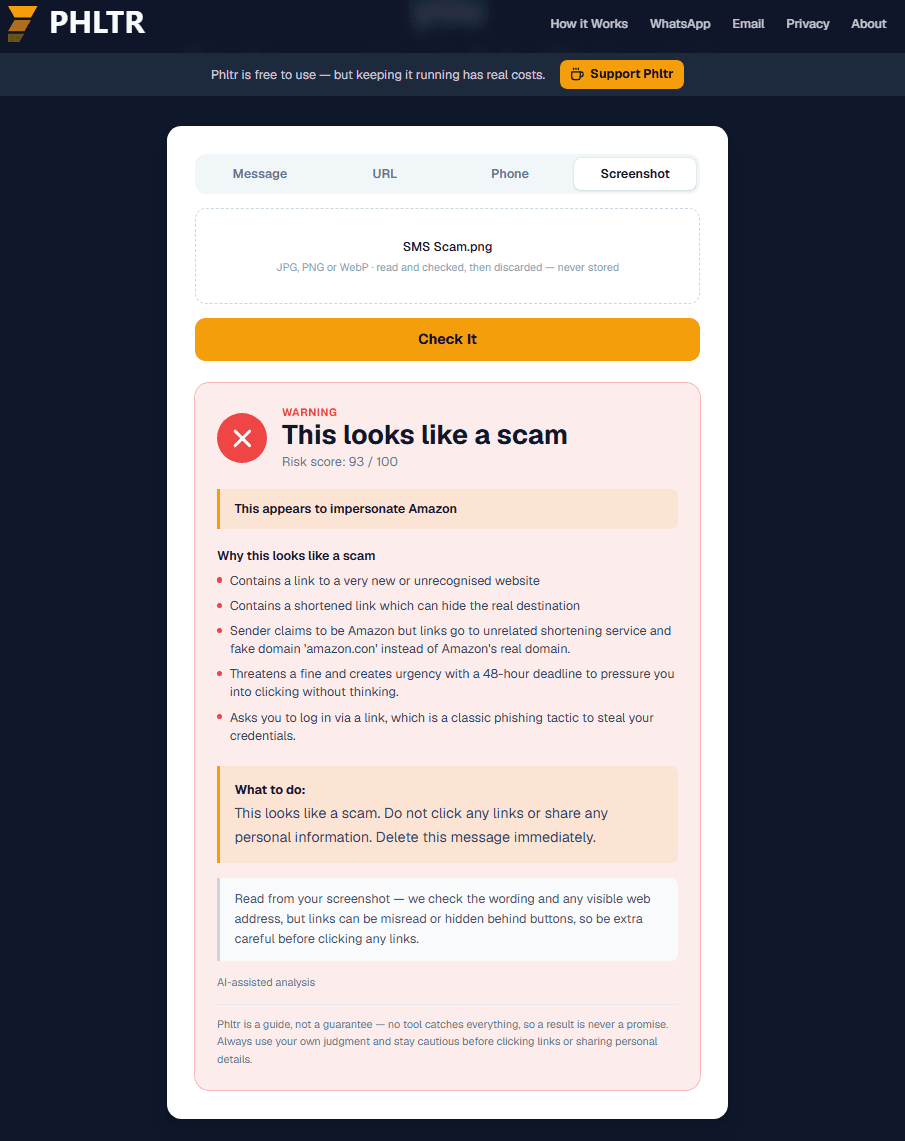
The two links in this message are shortened URLs using shorturl.at. Real companies do not send shortened links in SMS messages. They link to their own domain. A shortened link hides the real destination, which is exactly why scammers use them. Phltr flagged both links immediately.
The second link claims to be an opt-out for future messages. This is a common secondary tactic. People who are suspicious of the first link might feel safer clicking an opt-out. Both links go to the same type of destination and both are dangerous.
Example two: the WhatsApp Gold upgrade
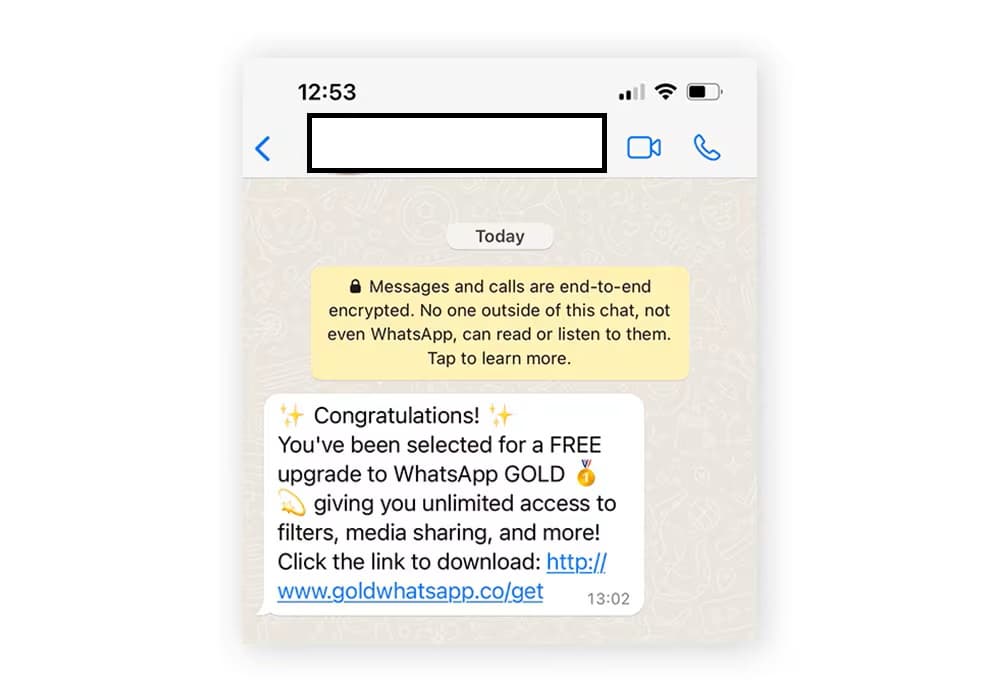
This one works differently. Instead of threatening you it flatters you. You have been selected. You have won something. There is a free upgrade waiting for you. The emotion being targeted here is excitement rather than fear, but the goal is identical: get you to click a link before you stop to ask whether any of this makes sense.
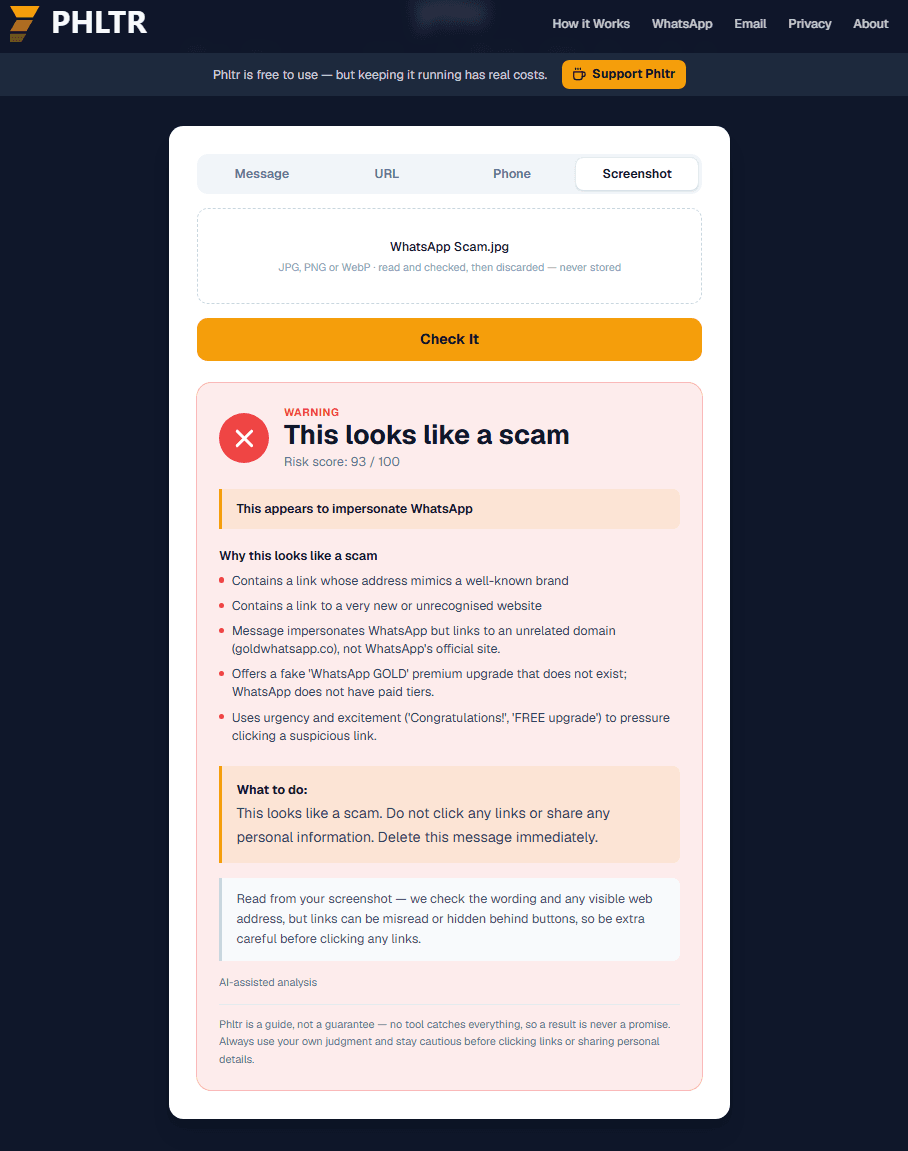
WhatsApp Gold does not exist. WhatsApp is a free app owned by Meta. It does not have a premium tier, a gold version, or an upgrade programme. There is no such thing as WhatsApp Gold and there never has been. Any message offering it to you is a scam, regardless of how it is worded or what features it promises.
The link in this message goes to goldwhatsapp.co, which has nothing to do with WhatsApp's real domain of whatsapp.com. The word whatsapp appears in the domain but the actual website belongs to whoever registered goldwhatsapp.co, not to WhatsApp or Meta.
What makes this scam particularly notable is where it arrived. It came through WhatsApp itself, from an unknown contact. Scammers use WhatsApp to spread these messages because the platform's end-to-end encryption and ease of contact make it simple to reach large numbers of people quickly. Receiving a message on WhatsApp does not make it legitimate.
The two approaches scammers use on your phone
These two examples illustrate the two main emotional levers scammers pull in text and messaging scams.
Fear-based messages threaten something bad unless you act. A fine, a suspended account, a package being returned, legal action. The goal is panic. A panicked person acts quickly and does not verify.
Reward-based messages offer something good if you act. A free upgrade, a prize, a selected offer, a limited time benefit. The goal is excitement. An excited person also acts quickly and also does not verify.
Both approaches rely on the same thing: getting you to respond before your rational mind has had a chance to question what is actually being said. The antidote to both is the same. Pause. Ask whether the scenario makes sense. And if you are not sure, check it before you click anything.
What real companies actually do
What the real thing looks like
Real companies do not send fine notices by text message. Amazon does not fine customers for return failures. Your bank does not threaten legal action by SMS. Government agencies do not demand payment through a link in a text. Legitimate businesses link to their own official domain, never to shortened URLs or lookalike addresses that include their name alongside other words. Apps like WhatsApp do not offer premium upgrades through unsolicited messages from unknown contacts. If you ever receive a message that seems to be offering or threatening something extraordinary, the safest assumption is that it is a scam until you can verify it through official channels.
Not sure about a text or WhatsApp message? Check it here.
You can also forward suspicious WhatsApp messages directly to the Phltr WhatsApp bot and get an instant verdict without visiting the website at all. Find the details on the WhatsApp page.
What to do if you already clicked
If you tapped a link in a suspicious text but did not enter any information on the page that opened, close it immediately and do not return to it. Consider running a security scan on your device as a precaution.
If you clicked and entered personal details such as your name, address, or contact information, be aware that scammers may use this in future targeted messages. Stay cautious about unexpected communications in the coming weeks and do not engage with follow-up messages from unknown numbers.
If you clicked and entered payment details, contact your bank immediately and ask them to cancel the affected card. Report any unrecognised transactions and ask your bank to flag your account for suspicious activity.
If you clicked and downloaded anything, treat this more seriously. Delete the downloaded file without opening it, run a security scan on your device, and if you are concerned about what may have been installed contact your device manufacturer's support line for guidance.
A note on the opt-out link
If a scam message includes an opt-out or unsubscribe link, do not click it. This is a common secondary tactic. The opt-out link goes to the same type of destination as the main link and serves two purposes for the scammer. First, it captures people who are suspicious of the main link but feel safer clicking something labelled as an opt-out. Second, clicking any link in the message confirms to the sender that your number is active and being read, which makes it more valuable. Block the number and report the message instead of engaging with any link in it at all.
Where to report it
- Canada
- Report to the Canadian Anti-Fraud Centre at reportascam.ca or by calling 1-888-495-8501. Forward the suspicious text to 7726 to report it to your mobile carrier.
- United Kingdom
- Forward the text to 7726 to report it to your carrier. Report scam WhatsApp messages directly through WhatsApp by pressing and holding the message and selecting Report. You can also report to Action Fraud at actionfraud.police.uk.
- United States
- Forward the suspicious text to 7726 to report it to your carrier. Report to the FTC at reportfraud.ftc.gov.
- Barbados
- Report to the Royal Barbados Police Force at your local station or contact the Cybercrime Unit. Notify your mobile carrier about the suspicious number.
- Anywhere else
- On WhatsApp specifically you can report a contact by going to their profile, scrolling to the bottom, and tapping Report. This sends information to WhatsApp about the account sending scam messages.
Questions people ask about text and WhatsApp scams
The message had my real name in it. Does that mean it is genuine?
Not necessarily. Personal information including names, phone numbers, and email addresses are frequently exposed in data breaches and sold in bulk to scammers. A message containing your name was not necessarily sent by someone who knows you or has a legitimate relationship with you. It may simply mean your details appeared in a leaked database at some point.
Someone I know forwarded me this WhatsApp message. Does that make it safe?
No. Many WhatsApp scams spread precisely because people forward them to friends and family without realising they are scams. Your contact forwarding the message means they received it too, not that it is legitimate. If something seems too good to be true or asks you to click a link, check it regardless of who sent it to you.
WhatsApp says messages are end-to-end encrypted. Does that mean they are safe?
End-to-end encryption means nobody can intercept the message while it is being transmitted. It says nothing about whether the person who sent the message has good intentions. A scam message is just as private and encrypted as a genuine one. Encryption protects the communication channel, not the content of what is being sent through it.
Amazon texted me about a real order once. How do I tell the difference?
Real Amazon messages about orders include your order details and link to amazon.com or a country-specific Amazon domain. They do not threaten fines, use shortened links, or ask you to log in through a link in a text message. If you are unsure whether a message is from Amazon, log in to your Amazon account directly by typing the address yourself and check your orders and messages there.
Is WhatsApp Gold real?
No. WhatsApp Gold does not exist and has never existed. WhatsApp is a free app with no paid tiers or premium versions. Any message, post, or website claiming otherwise is a scam. This particular scam has been circulating in various forms for years and shows no signs of stopping because it continues to catch people who have not heard of it before.