Quick answer: this is a scam
If you received a text saying your package cannot be delivered because of an address problem and asking you to click a link or reply to fix it, do not do either. This is a scam. Real postal and courier services do not ask you to confirm your address through an unsolicited text message from an unknown number.
The address problem text: a scam designed to feel urgent
This particular type of scam works because it targets something almost everyone has experienced at some point: a package that did not quite make it to you. The message does not need to feel perfectly convincing. It just needs to create enough uncertainty that you click the link before stopping to think.
The scenario it presents sounds plausible. Your package arrived at a warehouse but could not be delivered because of incomplete address information. All you need to do is confirm your address and it will be on its way. Simple, reasonable, urgent. Except none of it is real.
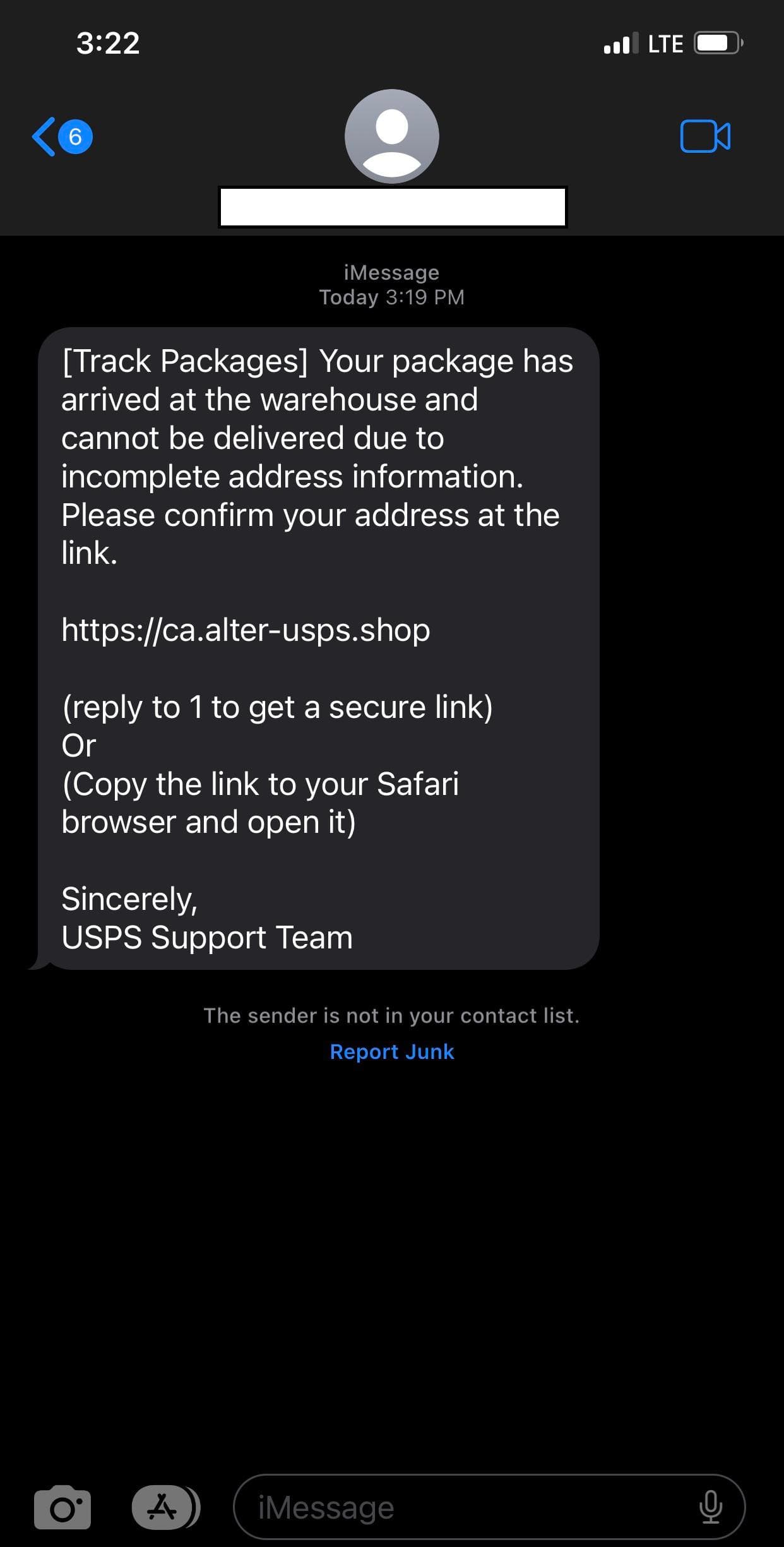
While the example below shows a message impersonating USPS, this same scam runs using every major postal service and courier in every country. In Canada you will see it using Canada Post and Purolator. In the UK it uses Royal Mail and Evri. In Australia it targets Australia Post. The postal service name changes. The address problem story, the suspicious link, and the pressure to act quickly stay exactly the same.
What makes this one particularly worth knowing about
Most delivery scam texts follow a straightforward pattern: here is a problem, here is a link, click it. This one has a few additional tactics that are worth understanding because they are becoming more common.
The generic tag at the start. The message opens with [Track Packages] in square brackets. This is not something USPS or any real postal service does. It is an attempt to make the message look like it comes from an automated tracking system. Real automated tracking messages from couriers identify themselves by the company name and include your actual tracking number, not a generic tag.
The link has nothing to do with the real website. USPS's real website is usps.com. The link in this message goes to ca.alter-usps.shop. That is not USPS. The word usps appears in the domain name but the actual domain is alter-usps.shop which is a completely unrelated website built specifically to deceive people into entering their personal details.
It gives you two ways to engage, not one. Most phishing texts just include a link. This one offers an alternative: reply with the number 1 to receive a secure link. This is a tactic designed to capture people who are suspicious of the link but might still reply to a text. Replying confirms your number is active to the scammer and may result in further targeted messages or calls.
It tells you to copy the link to your browser. The instruction to copy the link and open it in Safari rather than tapping it directly is another tell. Legitimate services want you to tap their link. Scammers sometimes include this instruction because certain security features on phones flag or block direct taps on suspicious links, but a manually copied URL might bypass them.
Your phone flagged it too. Apple's messaging app displayed the warning "The sender is not in your contact list" followed by a Report Junk button. That is Apple's own system telling you something about this message is suspicious. When your phone and Phltr both flag the same message, trust them both.
What Phltr found
We uploaded this screenshot to Phltr using the Screenshot tab on phltr.net. Phltr returned its highest risk score of any example in these guides, 93 out of 100.
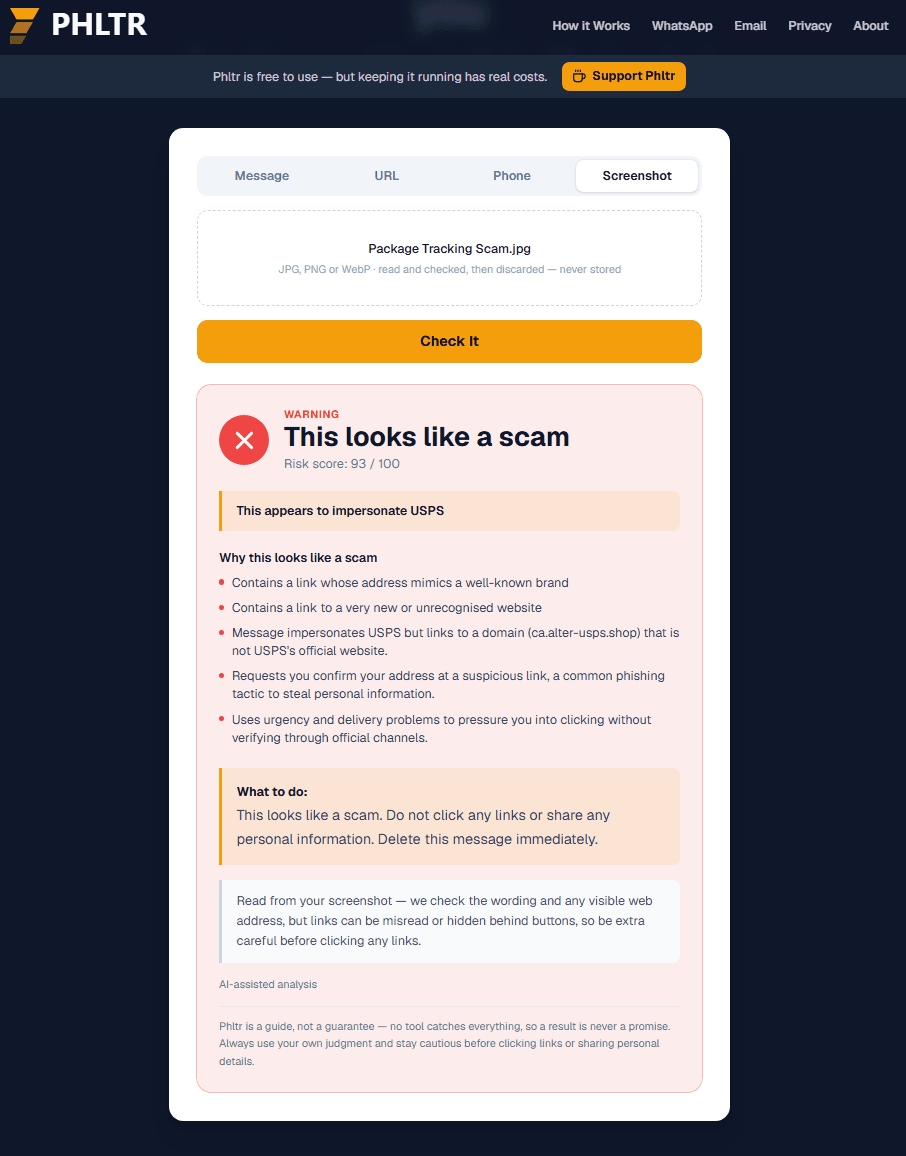
You can take a screenshot of any suspicious delivery text and upload it directly to phltr.net without clicking any links in the message. Phltr reads the text and checks any visible URLs and tells you what it found, all without you ever having to interact with the suspicious content yourself.
What real postal services actually do
Understanding how genuine delivery updates work makes it much easier to dismiss these messages confidently.
What the real thing looks like
Real postal services and couriers send tracking updates that include your actual tracking number so you can verify everything independently. They link only to their own official domain. USPS links to usps.com. Canada Post links to canadapost.ca. Royal Mail links to royalmail.com. They do not ask you to confirm your delivery address through a text message link. If there is genuinely a problem with your address it would typically be flagged at the point of ordering, not through an unsolicited text from an unknown number after the fact. Real delivery services also do not ask you to reply with a number to receive further instructions. If you ever receive a delivery notification and are not sure whether it is genuine, go directly to the courier's official website by typing the address yourself and enter your tracking number there.
Check a suspicious delivery text right now
If you received something similar and you are not sure about it, paste the message or screenshot it below. Phltr will check it immediately.
What to do if you already clicked or replied
If you tapped the link but did not enter anything on the page that opened, close it immediately and do not go back to it. Run a security scan on your device as a precaution since some phishing pages attempt to collect information or install software simply by being visited.
If you replied with the number 1 or any other response, your phone number is now confirmed as active to the scammer. You may receive further messages or calls. Be especially cautious about unexpected communications in the coming days and do not engage with any follow-up messages from unknown numbers.
If you clicked and entered your address or contact details, be aware that this information may now be used in future targeted scam attempts. Your full name and address in the hands of a scammer can be used to make future messages feel more personal and convincing.
If you clicked and entered payment details of any kind, contact your bank immediately and ask them to cancel your card and issue a replacement. Check your recent transactions and report anything unfamiliar to your bank right away.
How to check a real delivery yourself
The safest habit to build is this. When you receive any delivery notification by text, do not use the link in the message regardless of whether it looks legitimate. Instead find your original order confirmation from the retailer, get the tracking number from there, open your browser, type the courier's official website address yourself, and check the status directly. This way you never need to trust a link that arrived in your messages unsolicited.
Where to report it
- Canada
- Report to the Canadian Anti-Fraud Centre at reportascam.ca or by calling 1-888-495-8501. Forward the suspicious text to 7726 to report it to your mobile carrier.
- United Kingdom
- Forward the text to 7726 to report it to your carrier. Report to Action Fraud at actionfraud.police.uk or by calling 0300 123 2040.
- United States
- Forward the text to 7726 to report it to your carrier. Report to the FTC at reportfraud.ftc.gov. You can also report USPS impersonation specifically to the USPS Inspection Service at postalinspectors.uspis.gov.
- Barbados
- Contact the Royal Barbados Police Force at your local station or reach the Cybercrime Unit directly. Notify your mobile carrier about the suspicious number.
- Anywhere else
- Forwarding suspicious texts to 7726 works on most networks across Canada, the UK, and the United States and helps carriers identify and block numbers being used for mass scam campaigns.
Questions people ask about package tracking scams
I was actually expecting a package from overseas. Could this be real?
It is extremely unlikely. Even if you are expecting an international delivery, postal services do not reach out through iMessage from unknown numbers asking you to confirm your address through a link. If there is a genuine address issue with an international shipment it is typically handled through the retailer or customs authority directly. To be certain, find your tracking number from your order confirmation and check it on the carrier's official website.
Why does the domain have the word usps in it if it is fake?
This is a deliberate technique called a lookalike domain. Anyone can register a domain name that contains a brand name as long as it is not the official domain itself. So while usps.com belongs to the real postal service, something like alter-usps.shop or usps-tracking.net can be registered by anyone and used to deceive people. The presence of a brand name in a URL means nothing about whether the website belongs to that brand. What matters is what comes after the final dot before the first forward slash. That is the actual domain.
Should I reply to tell them it is a scam?
No. Replying in any way, even to say you know it is a scam, confirms to the sender that your number is active and being read. This can result in more targeted messages or your number being sold to other scammers. The best response is no response. Block the number and report it using the options above.
My phone said to Report Junk. Should I do that?
Yes, absolutely. The Report Junk option in Apple Messages forwards the message and sender information to Apple and your carrier. It takes one tap and helps protect other people from receiving the same message. You should also block the number after reporting.
What is the reply to 1 tactic about?
Asking you to reply with a number is a way for scammers to verify that your phone number is real, active, and being checked. A confirmed active number is more valuable than an unverified one. Replying also opens a dialogue that scammers can use to continue the conversation and attempt further manipulation. Never reply to messages from unknown senders asking you to respond with a number or code.